


CPD Register guest blog: Audit-ready by default: The systems and processes every CPD provider needs
If the answer is "a few minutes," your systems are in good shape. If the answer involves some combination of spreadsheets, email searches, and calls to your trainers, it's worth closing that gap before renewal rather than during it.
The accreditation itself confirms your courses meet a recognised standard. The systems behind your operation confirm you can demonstrate that, consistently, to anyone who asks.
This piece is about what that looks like in practice.
What accreditors actually ask for
When a CPD accreditation renewal or audit arrives, the documentation requests tend to follow a predictable pattern. Most accreditors want to see:
Attendance records. Not just registration lists, but evidence of who actually completed the training. This matters particularly for longer programmes where partial completion is common, and for courses where CPD hours are awarded based on participation time rather than just enrolment.
Certificate issuance logs. Which learners received certificates, when, and for which specific course version. If a learner contacts you six months later needing a replacement, or a professional body asks to verify a certificate, you need to be able to answer that question accurately and quickly.
Course version history. Accreditation covers a specific version of a course. If you've updated your materials, as most providers regularly do, you need a clear record of what changed, when, and which learners went through which version. Accreditors take content updates seriously because the quality assurance they applied was to the original submission.
Trainer records. Some accreditation bodies require individual trainer approval. If your delivery team has changed since your original application, the paperwork needs to reflect that.
The challenge with this list is that most providers don't have a single source of truth for all of it.
Where things go wrong
Most training providers, particularly those that have grown quickly, are running this information across a mix of tools that were never designed to work together.
Registrations live in one place. Certificates get generated manually and emailed out. Attendance is marked on a spreadsheet or noted in a trainer's calendar. Course materials are stored in a shared drive with filenames like "Module 3 FINAL v2 USE THIS ONE." Trainer approvals are sitting in an email thread from 18 months ago.
None of that is unusual. And for most day-to-day purposes, it functions well enough. The problem surfaces when you need to pull together a coherent audit picture, because the information exists but the trail doesn't.
Specific failure points that come up repeatedly:
Lost or duplicate certificates. When certificates are generated manually, there's no central record of what was issued. Learners request replacements you can't verify. Or worse, you discover you issued two certificates for the same course completion because two people in the team didn't know the other had done it.
No clear audit trail on approvals. Who signed off on this course version? When was it last reviewed? If that person has left, or the conversation happened in email, reconstructing the approval history is slow and often incomplete.
Version confusion. Updating course content without a formal versioning process means you can end up unable to confirm which materials a specific learner cohort was actually trained on. That's a difficult conversation to have with an accreditor.
Attendance records that don't match certificates. A learner attended three out of four sessions and you issued a full certificate anyway. It may have been deliberate. It may have been an oversight. Either way, if the records don't agree, it raises questions.
What audit-ready looks like in practice
The providers who handle accreditation renewal easily tend to share a few operational habits.
Registration, attendance, and completion are tracked in the same system. Not exported between systems, not cross-referenced manually.. When you issue a certificate, it's drawing from the same data that shows who attended and what they were taught. That removes the reconciliation step entirely.
Course versions are managed deliberately. When materials are updated, the change is logged. The previous version is archived, not overwritten. Cohorts are linked to the version they were trained on. This sounds like extra admin, but in practice it takes a few minutes per update and saves hours at renewal time.
Certificates are system-generated rather than manually produced. This creates an automatic log of what was issued, to whom, and when, without anyone having to maintain a separate spreadsheet. It also means replacement certificates can be reissued accurately rather than recreated from memory.
Trainer records are kept current and accessible. Any change to your delivery team such as new hires, contractors, departures, is reflected in your records at the time of change, not reconstructed when the accreditor asks.
The common thread is that none of this requires a separate compliance process. These are operational habits that happen to produce a clean audit trail as a by-product of running the training well.
If you're still at the stage of choosing an accreditation body, it's worth knowing that not all accreditation bodies operate to the same standards. The CPD Register is the UK's only independent Certification Body for CPD Accreditation Organisations, holding Certification Mark status with the UK Intellectual Property Office.
Rather than accrediting courses directly, The CPD Register assesses and certifies accreditation bodies themselves against published standards covering governance, assessment process and transparency, giving training providers an additional layer of assurance when choosing who to work with. The CPD Register's guide to selecting a CPD accreditation provider is a practical starting point.
Audit-ready by default with Arlo
A training management system like Arlo is built around exactly this model. Arlo gives CPD training providers a single connected system where course scheduling, registration, attendance, and certification are all linked. The audit trail isn't something you construct; it's something the system produces as you work. That's a practical example of what "audit-ready by default" looks like, though the principle applies regardless of which tools you use.
Attendance tracking happens through Arlo's instructor app, where trainers mark attendance against each session in real time. That data links directly to the registration record, so there's no reconciliation step between who enrolled, who showed up, and what they completed.
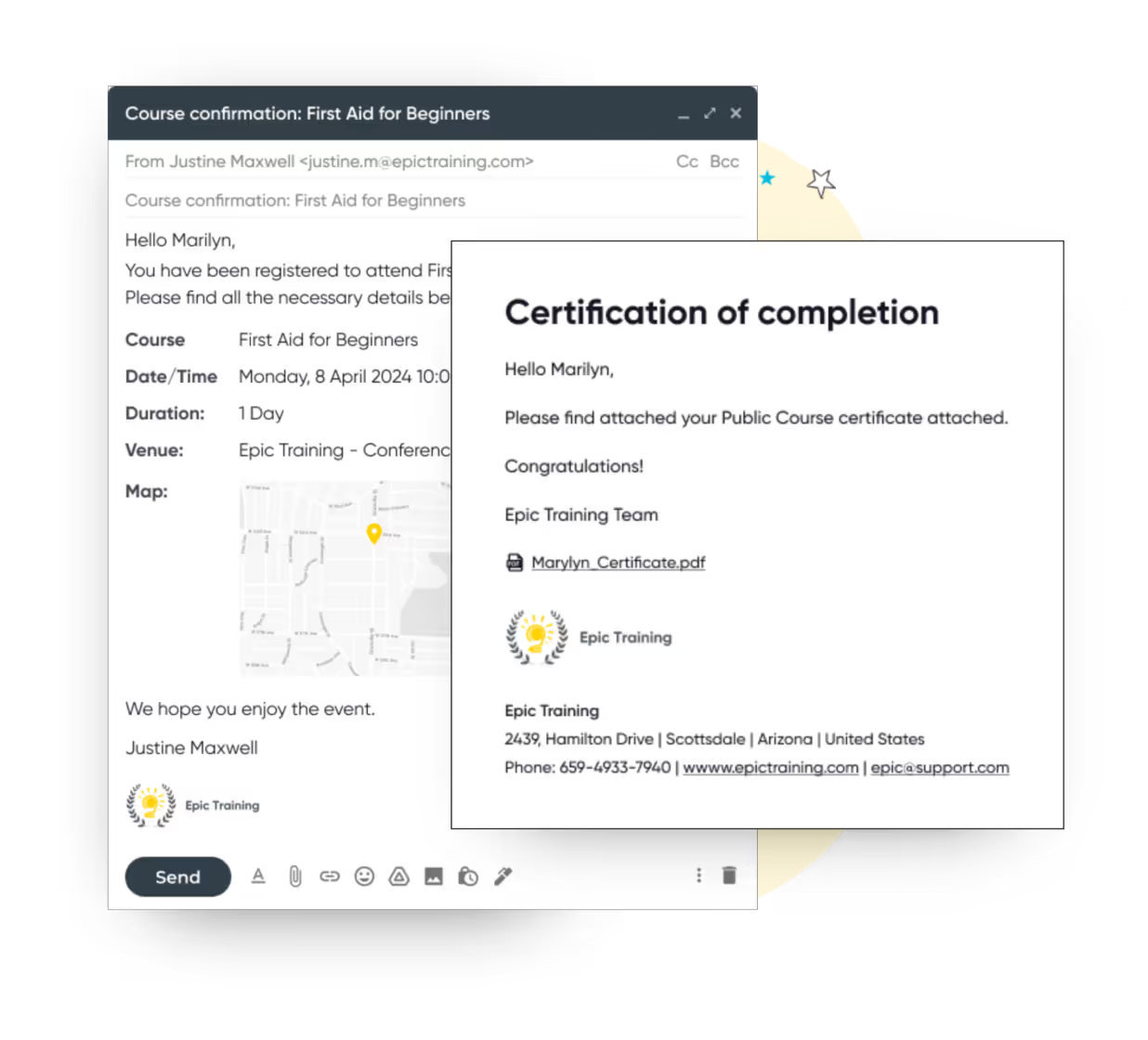
Certificates are generated automatically based on attendance or assessment outcomes, with each one tied to a specific learner, course, and completion date. Every certificate is logged, replacements can be reissued accurately from the same record, and you can pull a full issuance report against any course at any point.
Certification and licensing records are stored centrally, including scanned documents, giving you a single place to go when an accreditor asks to review your compliance records. Arlo also runs automated renewal workflows - when a certification is approaching expiry, the system flags it and triggers the renewal process, rather than relying on someone to track it manually.
Trainer and presenter records are managed through Arlo's scheduling tools, tracking which trainers are assigned to which sessions. If your accreditation requires approved trainers, you have a clear, searchable record of who delivered what.
For regulated sectors where third-party verification matters, Arlo also includes a certificate verification search, which lets learners or employers confirm directly that a certificate is genuine.
If you're managing a CPD programme and want to see how Arlo works in practice, you can book a demo or start a free 14-day trial.
Written by Melanie Hall Arlo